
Bench Warrants in Lanier County
A Lanier County bench warrant never appears out of nowhere. It grows out of a case already sitting before a judge, and something went wrong inside that case. Maybe the person missed a hearing, skipped a traffic setting, ignored a citation, or disobeyed a direct order of the court. When that happens, the judge directs issuance, and the warrant can flow into court and law-enforcement systems. From there it stays active until the court recalls it or the person appears. Which court matters, too. Probate Court administers Lanier traffic cases, while Lakeland Municipal Court takes city citations and ordinances. Magistrate Court runs preliminary criminal hearings plus some ordinance matters, and the Superior Court of the Alapaha Judicial Circuit holds felony cases and other criminal settings. Juvenile files follow restricted-access rules. One office's record is never the whole Lanier County picture, so check every court that could own the case.
Lanier County FTA Vocabulary
Lanier County's official materials lean on a few working terms: failure to appear, FTA reset, bench trial, and release of suspension. "Capias pro fine" is not the county's routine phrase. An FTA is simply a missed required appearance. A reset is a new setting the court grants, and a recall or quash is the court withdrawing the warrant itself.
- Bench warrant
- A judge's order tied to an existing case or unmet court duty.
- FTA reset
- A court-approved new setting after a failure to appear.
- Recall
- The issuing court's withdrawal of its warrant.
- Release of suspension
- The court notice used in the separate DDS license process after traffic reengagement.
These steps differ, even in Lanier County. Clearing the warrant does not end the charge, citation, fine, or the rest of the underlying case.
How a Bench Warrant Is Issued
Every Lanier County bench warrant traces back to a duty the court set and someone skipped. A docket, citation, or notice fixes the date and place. If the person does not show and no continuance was approved, the judge can issue a bench warrant straight from the existing case. Timing has rules. Lanier Traffic Court requires continuance requests at least 48 hours before the setting, and approval is still not automatic. Once issued, the warrant belongs to the court. The sheriff can process and serve judicial orders, but it cannot reset a Probate Court date or recall a Superior Court warrant. A traffic case adds another wrinkle: the failure to appear can trigger a separate Georgia DDS action against the license. The warrant stays open until the court records a lawful event, such as an appearance, a recall, or a disposition.
Lanier County Traffic FTA Sequence
A county traffic matter follows a distinct lane: Citation issued → required Probate/Traffic Court setting → failure to appear → possible bench warrant and DDS notice → court reengagement → Form 912 release when approved → separate DDS reinstatement.
Lanier County holds traffic court on the third Thursday, with arraignments at 9 a.m. and bench trials at 1 p.m., though the current calendar governs. The court states that an initial FTA reengagement process exists. Further failures to appear are discretionary, and submitting a request guarantees no reset or release. The Georgia DDS failure-to-appear FAQ lays out the state suspension and release channel.
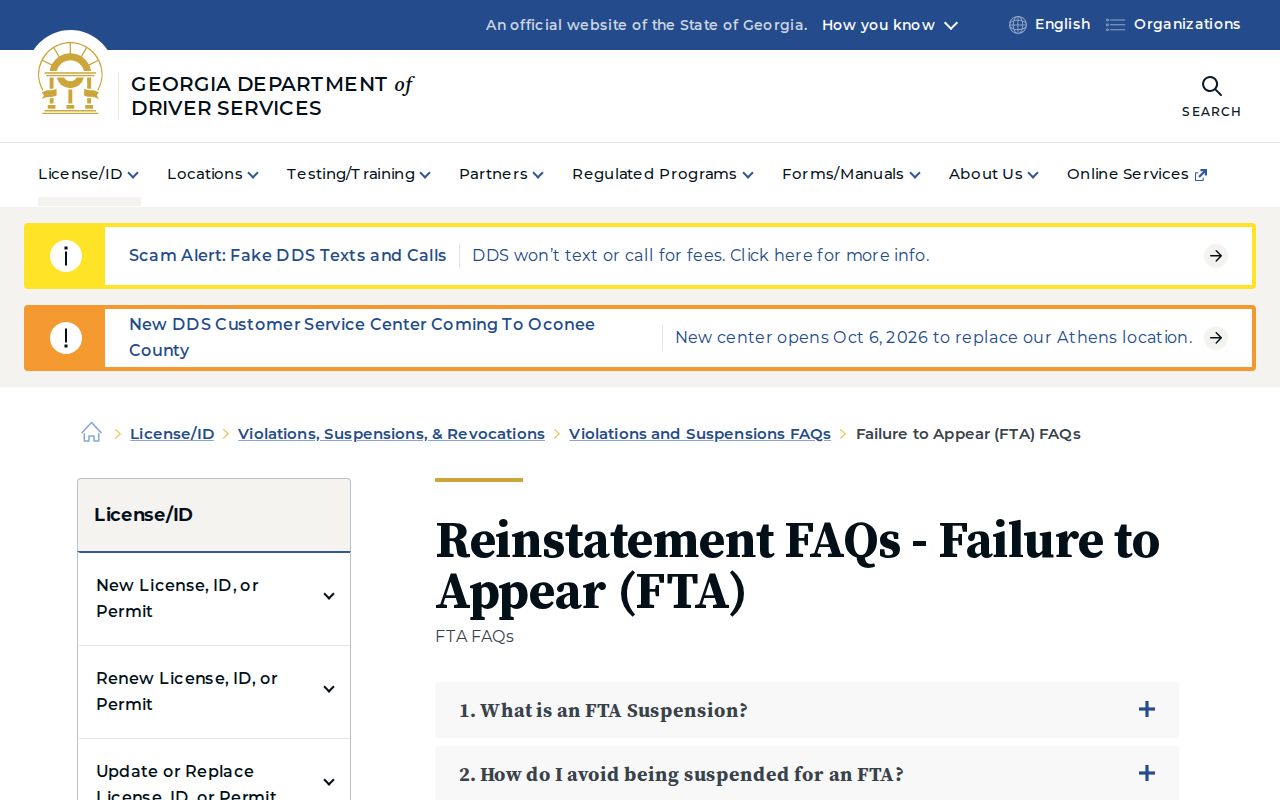
The state screen shows why court recall and driver-license reinstatement must each be confirmed.
Bench Warrant vs Arrest Warrant
The difference comes down to why each warrant began. A bench warrant answers a missed duty inside an existing Lanier County case. An arrest warrant rests on probable cause that an offense occurred and authorizes custody on that basis. Both can end in arrest, yet each springs from different records and demands different steps in court.
| Feature | Bench warrant | Arrest warrant |
|---|---|---|
| Trigger | Missed setting or unmet order | Sworn facts supporting probable cause |
| Issuer | Judge in existing case | Authorized judge or magistrate |
| Key record | Docket, citation, FTA order | Application, affidavit, warrant |
| Next step | Reset, appear, or seek recall | Advice, surrender, bond, hearing |
The Lanier County arrest warrant record explains the probable-cause path in more depth.
Check Lanier County Bench Warrants
Lanier County publishes no sheriff warrant roster, and Georgia runs no single statewide public warrant search. Start instead with the ticket, notice, or case number to pin down which court issued the warrant, then call that clerk. For service or jail status, contact the Lanier County Sheriff's Office at 229-482-3545. A written Georgia Open Records Act request can seek existing sheriff records, and the court's own request process can reach existing court documents.
- Gather the full name, date of birth, case or citation number, and notice.
- Call Probate/Traffic at 229-482-3668, Municipal at 229-482-3309, Magistrate at 229-482-2207, or Superior Clerk at 229-482-3594.
- Ask for current status, warrant identifier, required appearance, and needed recall event.
- Confirm service or custody details with the sheriff if directed.
- Request written proof or a docket entry after the court acts.
Juvenile, sealed, and investigative files may be withheld in Lanier County, and a blank online result never proves no warrant exists.
How to Resolve a Lanier County Bench Warrant
Call the issuing court before you walk into any Lanier County office. Georgia's official warrant guidance warns that an in-person check can mean immediate custody. Court staff explain procedure but cannot give legal advice. An attorney can ask about a motion to recall or quash and help arrange a planned appearance.
- Confirm the warrant and exact issuing court.
- Ask whether the judge requires a new date, personal appearance, attorney motion, payment, or bond.
- For traffic FTA, ask Probate Court about reengagement and Form 912.
- If surrender is ordered, ask the sheriff about intake, ID, bond method, and hours.
- Keep the court order or docket proof and confirm DDS release separately.
Do not ignore it: A Lanier County bench warrant can remain open and lead to custody before the underlying case is resolved.
Lanier County Court Record Routes
The issuing court remains the best source for current warrant status in Lanier County. Probate/Traffic Court sits at 56 W. Main Street, Suite 10, Lakeland. Lakeland Municipal Court handles city matters at 64 South Valdosta Road. Magistrate Court is at 100 Main Street, Suite 3, and the Superior Clerk sits at 56 W. Main Street, Suite 5. The GSCCCA Lanier clerk profile names the Superior and Juvenile record office along with public hours and phone.
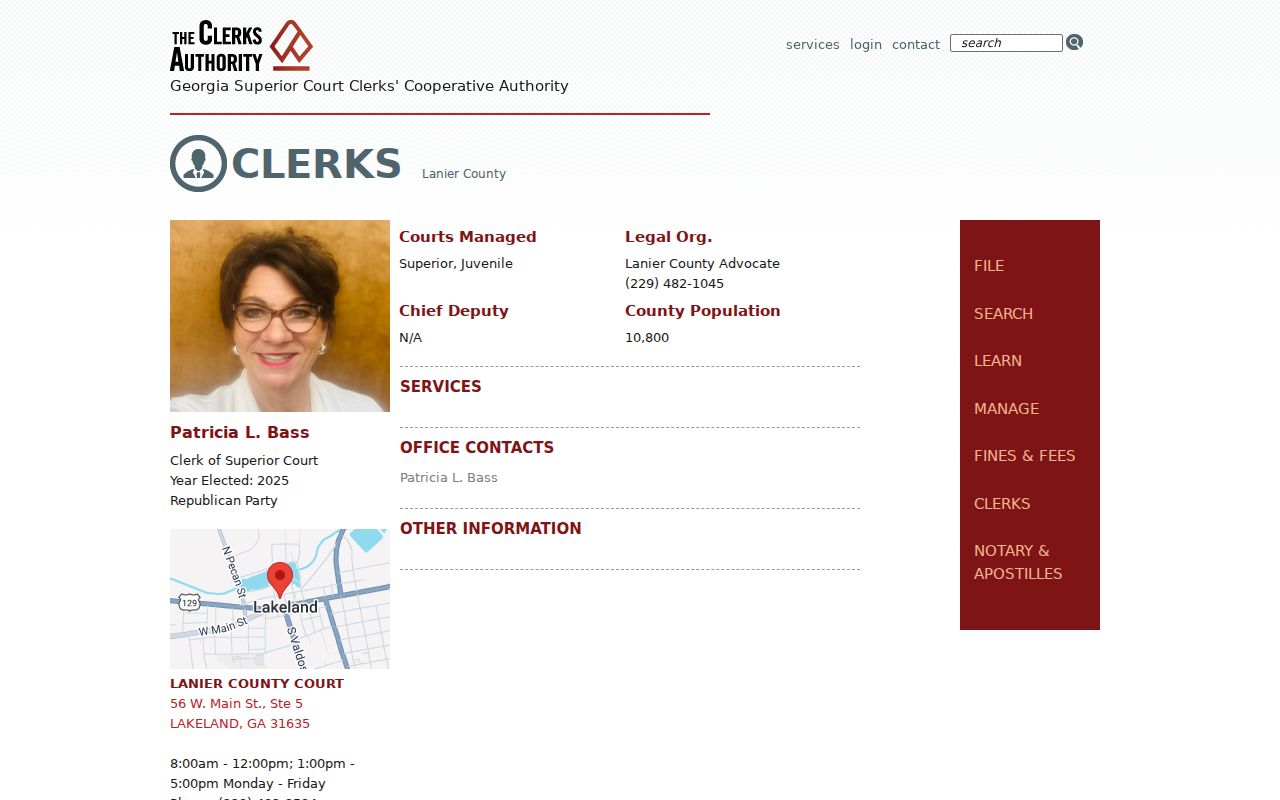
That profile routes felony and Superior Court bench matters in Lanier County while showing why juvenile files take a restricted path.
Lanier County Circuit Contacts
Lanier County sits in the Alapaha Judicial Circuit, a fact that matters when a Superior Court case, probation issue, or felony setting produced the warrant. The clerk keeps the case file; the judge controls court action. Calling the sheriff alone cannot substitute for contacting the issuing court. The Alapaha Judicial Circuit directory lists the chief judge's Lanier office and the judicial-assistant route.
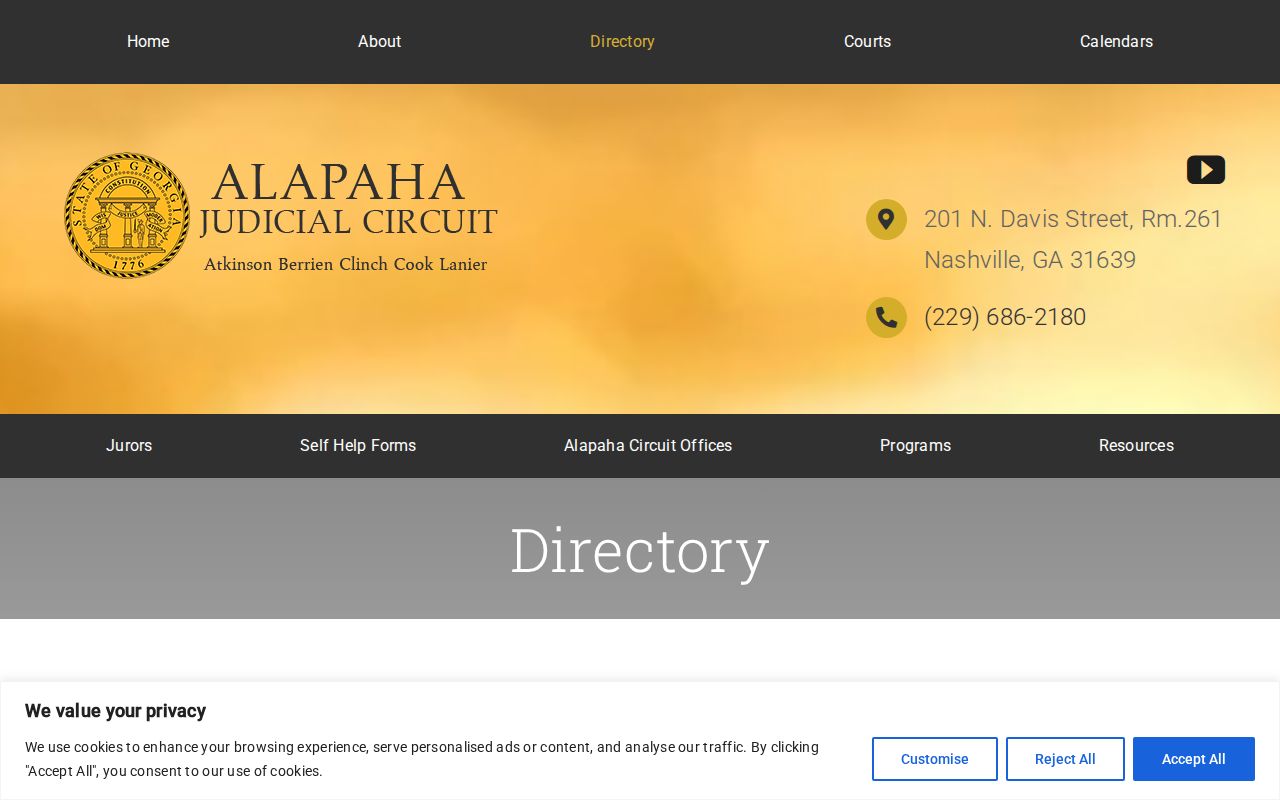
Use the directory to find the right Lanier County office. It cannot replace status confirmation from the clerk or sheriff.
Which Lanier County Court Issued It
Figuring out which Lanier County court issued a warrant starts with the paper that started the case. A traffic citation usually means Probate/Traffic Court or Lakeland Municipal Court. A Magistrate hearing or an ordinance case points to Magistrate Court. Felonies, probation matters, and Superior notices belong to the Superior Court of the Alapaha Judicial Circuit, while juvenile matters must go through authorized Juvenile Court channels. Lost the notice? Give the clerk a name, a date of birth, and any case or citation number you have. Ask which court owns the case and which judge must act. For sheriff-held documents, send a written request to the sheriff's records custodian under the Georgia Open Records Act; for court documents, use the court's own request channel. Neither office has to build a warrant database for you. Ask, too, whether the warrant is active, served, recalled, or closed, and which docket event supports that status.